In the press
Bootwerkers
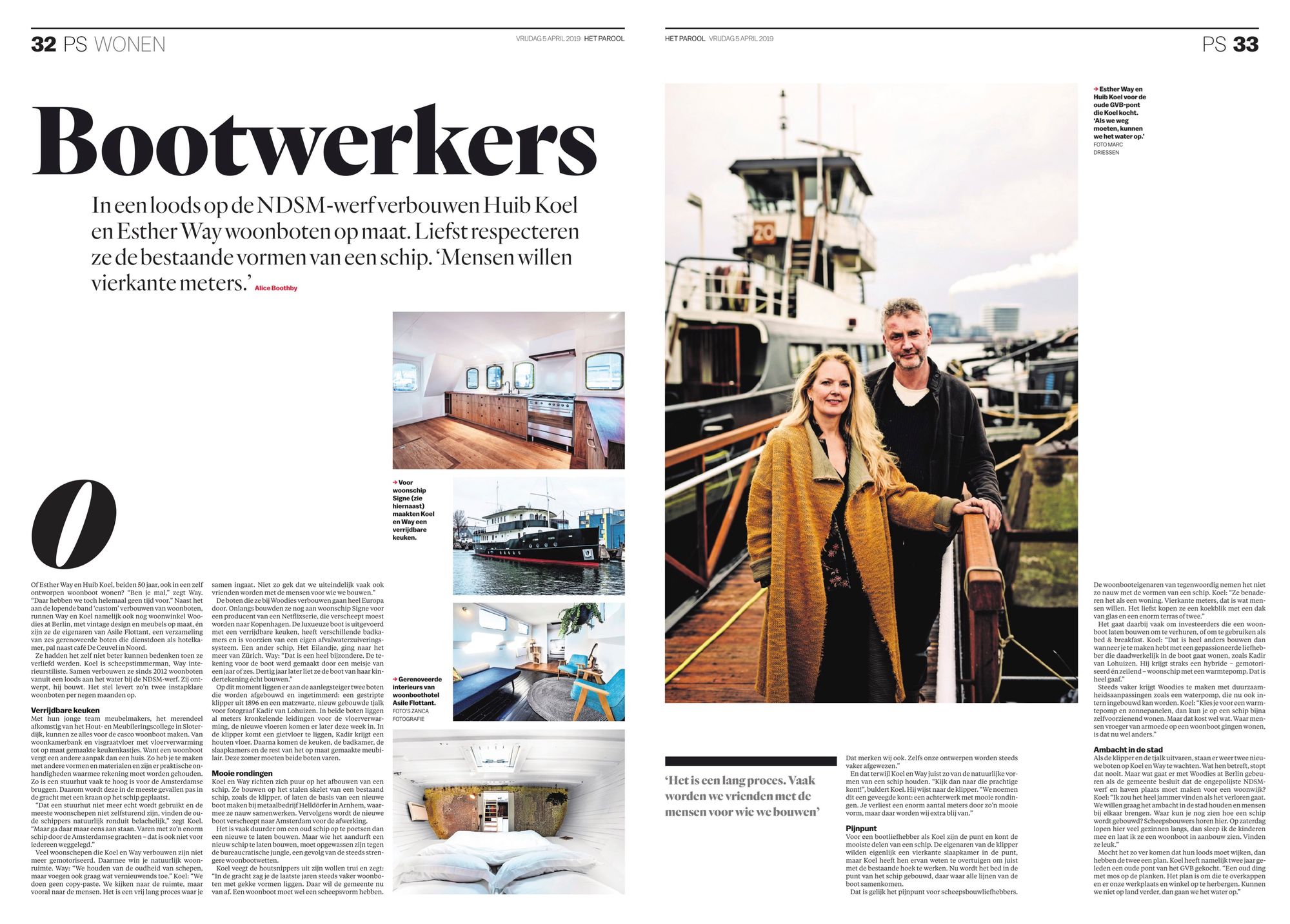
Het Parool's PS Wonen visits the shed on the NDSM wharf where Huib Koel, a ship's carpenter, and Esther Way, an interior stylist, have been converting houseboats since 2012. With a young team of furniture makers, most of them trained at the Hout- en Meubileringscollege, they deliver around two houseboats ready to move into every nine months, and they make almost everything on board themselves, from the sofa to the made-to-measure kitchen cupboards.
Boats that travel
The article follows boats that went far beyond Amsterdam. Signe, built for a producer of a Netflix series, was shipped to Copenhagen with a kitchen that slides away. Eilandje went to Zürich, drawn after a picture a girl made as a child. On the jetty at the time of the visit lay a klipper from 1896 and a new tjalk for photographer Kadir van Lohuizen, a hybrid ship with a heat pump.
The shape of a ship
The title quote, that people want square metres, sums up the tension the couple works in: owners often want a box with a glass roof, while Koel and Way would rather work with the curves of the bow and the stern. They see more and more questions about sustainability, and they plan to move their workshop onto an old GVB ferry they bought, so that the craft stays in the city even if the shed has to go.
Welkom aan boord
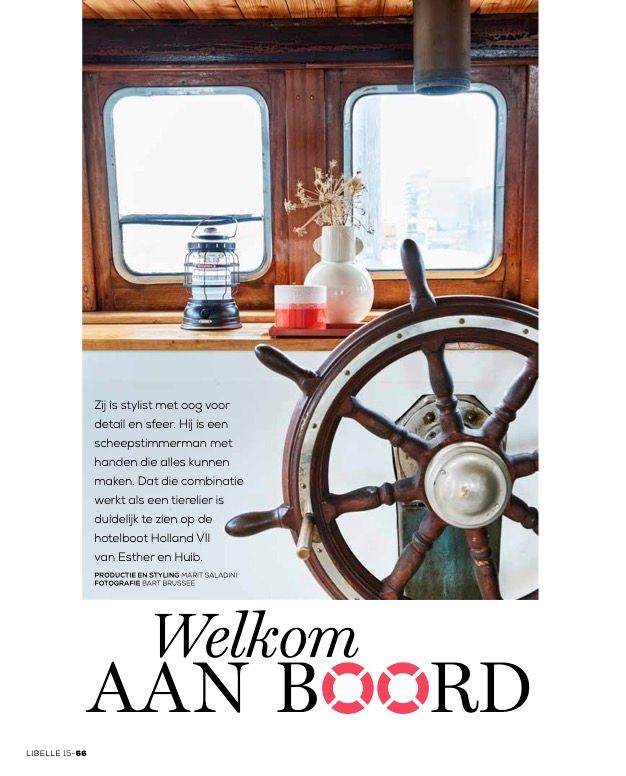
Libelle's home section steps on board Holland VII, a former herring logger built around 1911, moored in Amsterdam-Noord. The boat is one of the rooms of Asile Flottant, the floating hotel that Esther Way and Huib Koel run with six converted houseboats, next to their shop Woodies at Berlin.
Room where there was none
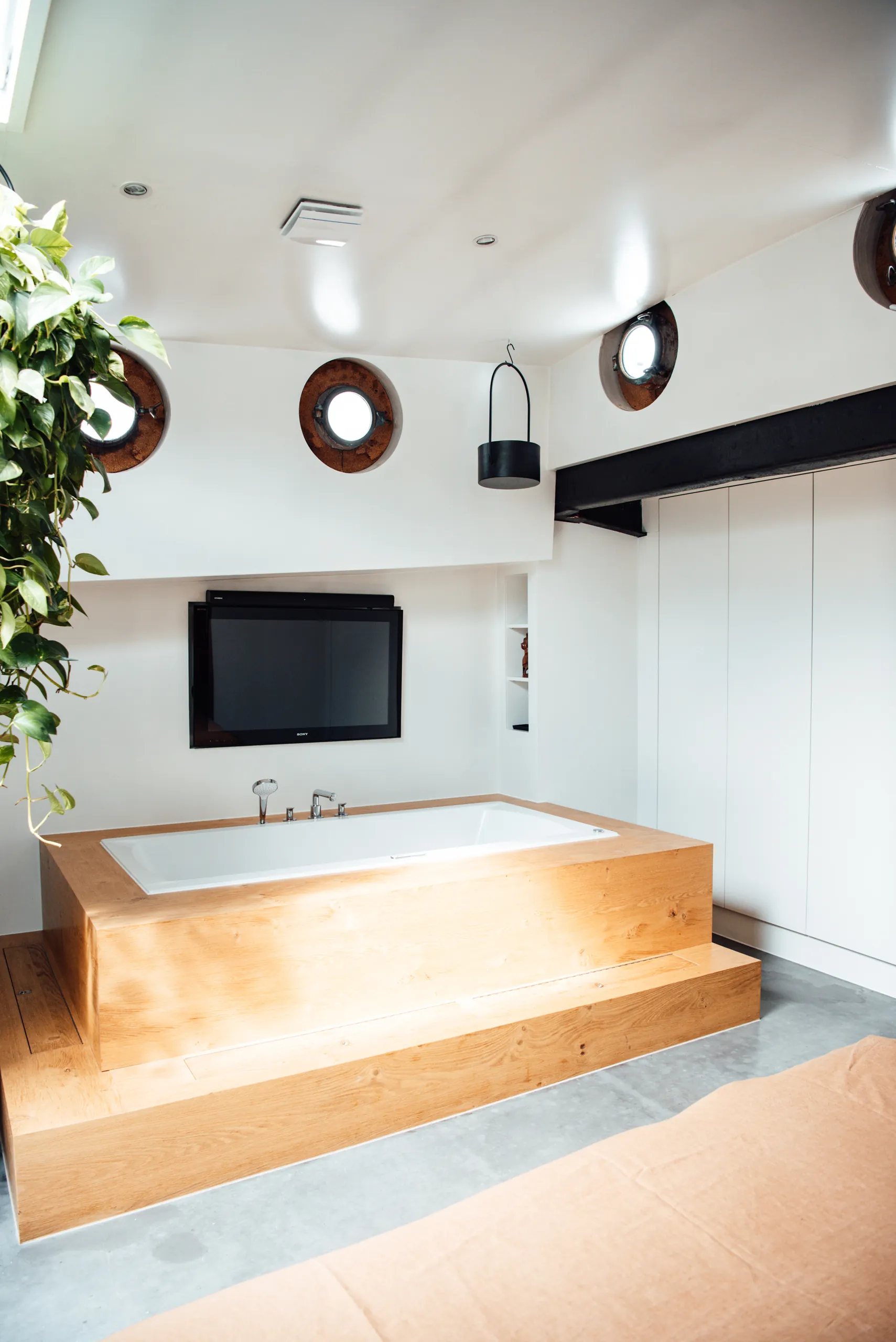
Where the catch was once lowered into the hold through a hatch, there is now a living room under walk-on glass. Narrow berths made way for wide beds, and the old engine room became a modern bathroom. The article shows how slanted walls were turned into built-in benches and beds with storage, and how hanging plants make a low floor feel larger.
Calm, with a sustainable twist
The walls were painted in one soft white so the natural materials could carry the interior: reed, jute, cotton and wood. Original elements such as the old stove, pulleys and the ox-blood red were kept, leftover wood was reused, and the result has, in the couple's words, a Scandinavian touch. Way describes the division of roles simply: she brings the atmosphere, Koel makes it.
Traditionele interieurs met een twist
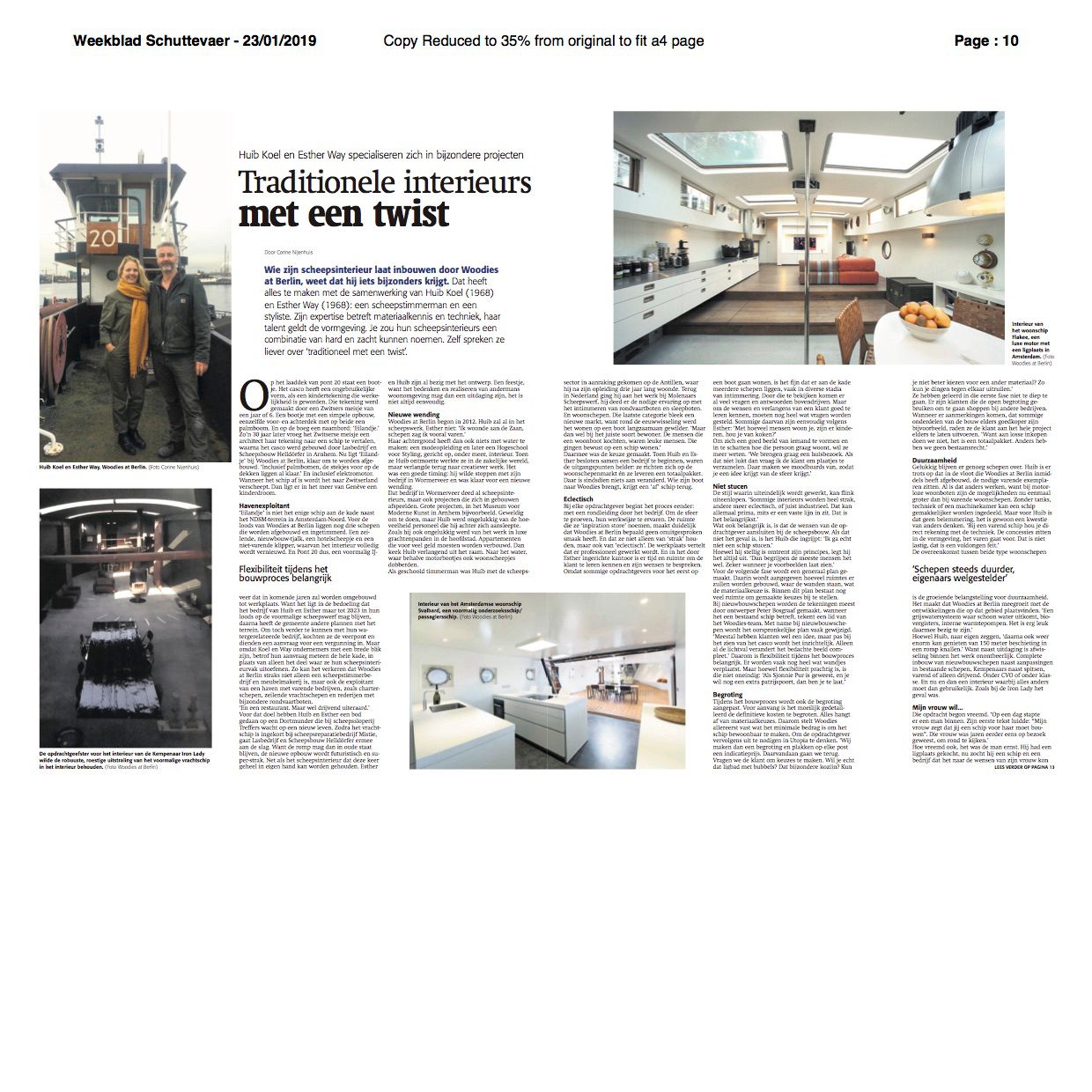
Weekblad Schuttevaer introduces Woodies to the maritime trade through the two people behind it: Huib Koel, a ship's carpenter whose strength is materials and technique, and Esther Way, a stylist whose talent is form. Together they describe their work as traditional with a twist: interiors that respect the ship, finished with a contemporary eye.
Projects with a story
The article walks through several boats. Eilandje started from a drawing made by a Swiss girl, built years later as the boat she had imagined. The Iron Lady, a Kempenaar, kept the robust, rusty character of a former cargo ship in her interior. Flakkee, a luxe motor, and Svalbart, a former research and passenger ship, show the range of hulls the yard works with.
How a build runs
Koel and Way explain why flexibility during the build matters: a ship rarely behaves exactly like the drawing, and owners often decide more once they stand in the hull. They also describe how they set a budget with their clients, and how questions about sustainability, from heat pumps to solar panels, have become part of almost every project.
Hier werk ik!
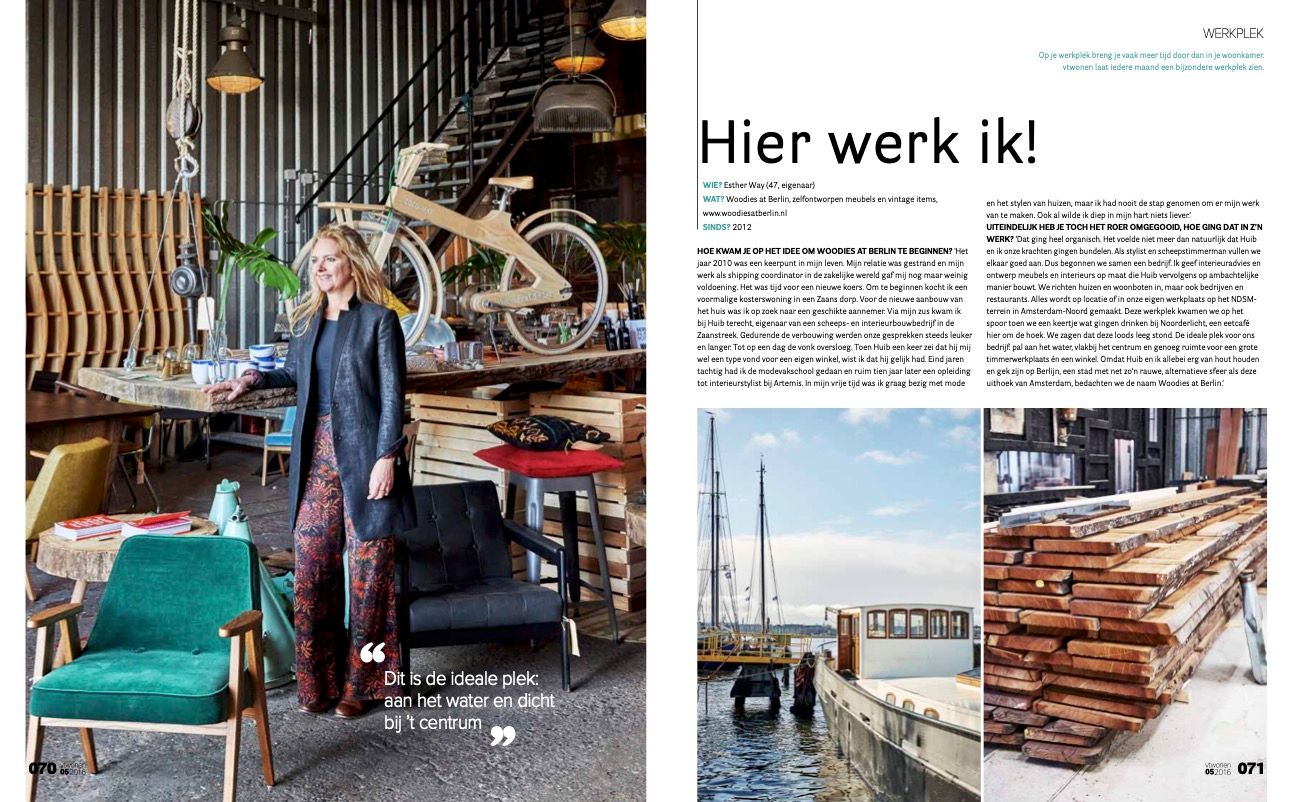
In vtwonen's Werkplek column, Esther Way tells how Woodies began. In 2010 she left her job as a shipping coordinator, bought a former sexton's house in a village on the Zaan and, through her sister, met Huib Koel, who ran a ship and interior building company. They started working together, and the work grew from houses into boats, businesses and restaurants.
A shed with a history
In 2012 they found their place: a hall that had been the washroom of the NDSM yard, once one of the largest shipyards in the world, which closed in 1984. They cleared it, built a raised floor and turned the front into an inspiration store, where clients sit at the long table to discuss a piece of furniture or a whole interior, surrounded by vintage finds, the yard's own furniture and work by local makers.
Life around the yard
The piece also covers the Kaap de Groene Hoop festival that Way and Koel started on the NDSM grounds, and ends with her favourite addresses in Amsterdam-Noord. The ideal place, as she puts it in the headline quote: on the water and close to the centre.
Vogelvrij
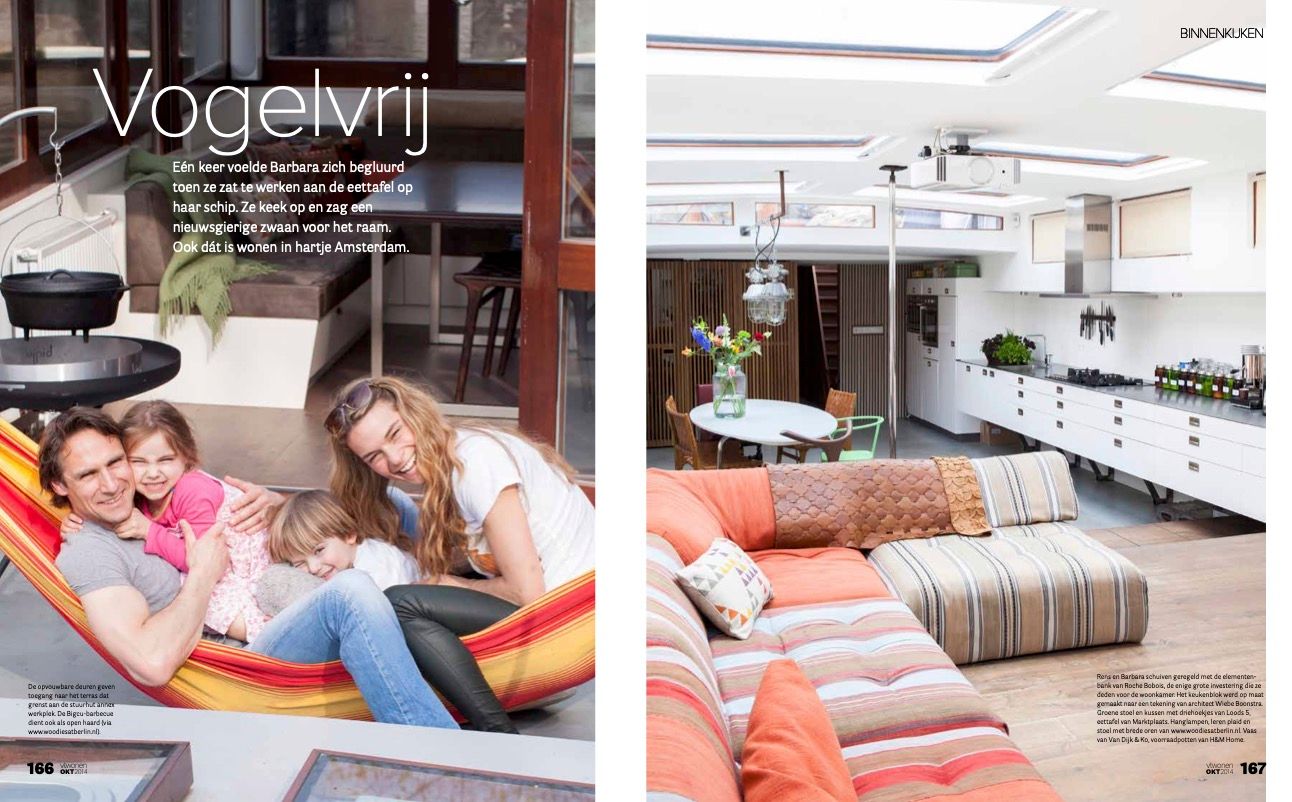
In vtwonen's Binnenkijken, Barbara and Rens den Hollander show the houseboat they live on with their two children in the centre of Amsterdam: a ship of 25 metres with 140 square metres of living space, where a curious swan sometimes looks in through the window while Barbara works at the dining table.
A ship built around a family
The couple had the boat designed for their own way of living. The hull was towed from Wormerveer, where Woodies did the layout and the finishing. The rules on the canals set the limits, at most 25 metres long and just over five wide, so every centimetre was planned: a seven-metre kitchen designed by architect Wiebe Boonstra, sliding doors that close off the sleeping rooms, and a climbing pole in the living room that the children love.
Living on the water
The article shows the good and the hard sides of life on the canals: privacy and space close to the city, but also the crowds on King's Day and the Canal Parade, and the upkeep a steel hull asks for. For the family the balance is clear: a home with the comfort of a house and the freedom of the water.
At the monumental
NDSM shipyard
FAQ